

2026 Hyundai Tucson vs 2026 Mitsubishi Eclipse Cross: Compact SUV Choice in Alberta
2026 Hyundai Tucson vs 2026 Mitsubishi Eclipse Cross: Compact SUV Choice in Alberta
Posted on June 30, 2026
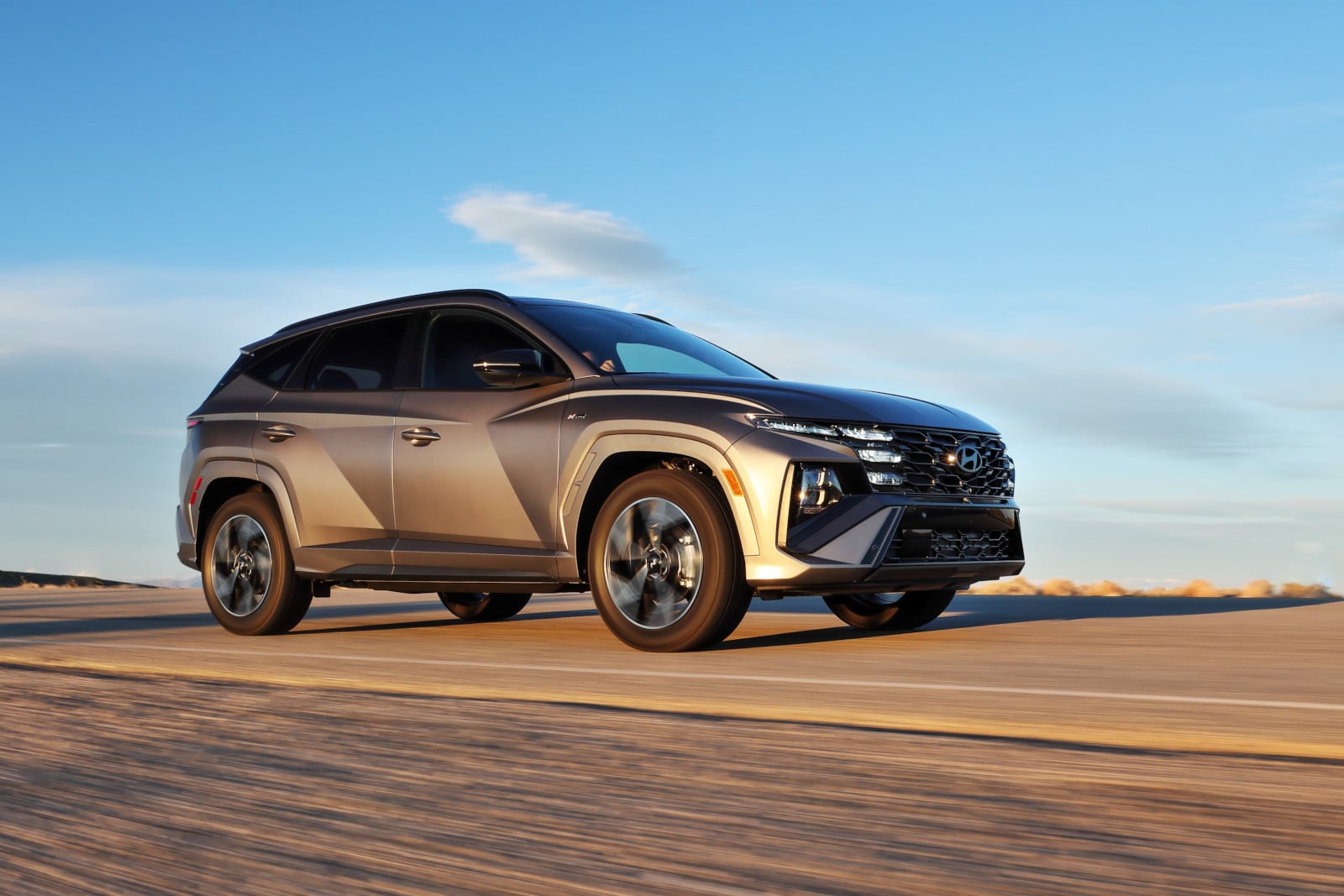
Picking between the 2026 Hyundai Tucson and the 2026 Mitsubishi Eclipse Cross comes down to one core question: how much do you actually need from your compact SUV? Both seat five and arrive with all-wheel drive standard. Beyond that, the two vehicles head in very different directions.
For Alberta drivers who carry gear regularly, want fuel flexibility, or need a back seat that adults can actually use, the Tucson covers far more ground.
2026 Tucson vs. Eclipse Cross: Side-by-Side
| Feature | 2026 Tucson | 2026 Eclipse Cross |
| Powertrains available | Gas, Hybrid, PHEV | Turbo Gas only |
| Peak combined horsepower | 268 hp (PHEV) | 152 hp |
| Fuel economy, combined | 6.7–8.8 L/100km | 9.3 L/100km |
| Cargo volume (seats up) | 1,095–1,097 L | 657–663 L |
| Cargo volume (seats down) | 1,876–2,119 L | 1,407–1,419 L |
| Infotainment screen | 12.3" | 8" |
| Rear legroom | 1,050 mm | 943 mm |
| Max towing (with trailer brakes) | 3,500 lbs (1,588 kg) - 2.5L | 2,000 lbs (907 kg) |
| Drivetrain | AWD | AWD |
| Powertrain warranty | 5 yr / 100,000 km | 10 yr / 160,000 km |
| Basic warranty | 3 yr / 60,000 km | 5 yr / 100,000 km |
Powertrain: One Choice vs. Three
The Eclipse Cross offers a single 1.5L turbocharged four-cylinder producing 152 hp and 184 lb-ft, routed through a continuously variable transmission. It is a capable daily driver, but that is the whole menu.
The Tucson starts with a 2.5L naturally aspirated four-cylinder making 187 hp and 178 lb-ft, paired with an 8-speed automatic. The N Line and Ultimate move to a 1.6L turbo hybrid: a 178 hp gas engine working alongside a 64 hp electric motor for 231 hp combined and 271 lb-ft of torque. The optional PHEV on the Ultimate steps to 268 hp combined, still with 271 lb-ft.
That output gap matters on Alberta highways. While the Eclipse Cross’s CVT works smoothly around town, the Tucson’s 8-speed automatic on the base trim delivers more direct throttle response. The HEV’s 231 hp combined puts it in a different performance category entirely.
Fuel economy is where the Tucson’s hybrid option pulls decisively ahead. The 1.6T HEV returns 6.7 L/100km city, highway, and combined versus the Eclipse Cross’s 9.3 L/100km combined. The PHEV goes further: up to 51 km of all-electric range from its 13.8 kWh lithium-ion battery, with a 7.2 kW onboard charger for Level 2 top-ups in about two hours. For a daily commute, that 51 km covers a lot of ground before the gas engine even starts.
Interior Space and Technology
The cargo numbers are straightforward. With the second row in place, the Tucson holds 1,095–1,097 L; the Eclipse Cross holds 657–663 L. Fold the seats flat and the Tucson reaches up to 2,119 L versus 1,407–1,419 L in the Eclipse Cross. That is more than 430 L of additional space with seats up, enough to matter on every camping trip, grocery run, or weekend move.
Rear legroom underlines the same point. The Tucson offers 1,050 mm; the Eclipse Cross provides 943 mm. A 107 mm difference is one that adult rear passengers feel on longer drives.
On the technology side, the Tucson’s 12.3" infotainment display is standard from the entry Preferred trim, with wireless Apple CarPlay and Android Auto. The Eclipse Cross runs an 8" unit across the lineup. The Tucson Ultimate adds built-in navigation and a head-up display; the 12.3" digital instrument cluster comes standard from the Trend Package upward. Wireless charging is also available from the Trend Package on the Tucson.
Safety Tech: Standard Depth vs. Basics
Both vehicles include blind-spot warning, rear cross-traffic alert, and adaptive cruise control as standard equipment. The Tucson’s standard suite goes further from the start. Forward Collision-Avoidance Assist covers pedestrian, cyclist, and junction-turning scenarios. Lane Following Assist, Safe Exit Warning, Driver Attention Warning, and Intelligent Speed Limit Assist are all standard across every Tucson trim.
The Tucson Ultimate adds a second tier of technology the Eclipse Cross does not offer at any level: Highway Driving Assist 1, Blind View Monitor, Surround View Monitor, Parking Distance Warning (forward, side, and reverse), Parking Collision-Avoidance Assist, and Remote Smart Parking Assist.
The Warranty: Acknowledging the Eclipse Cross’s Edge
The Eclipse Cross carries a 10-year/160,000 km powertrain warranty. The Tucson’s powertrain coverage is 5 years/100,000 km. That is a real structural difference, and it is worth stating plainly.
Here is the context: the Eclipse Cross’s longer warranty covers one powertrain configuration. The Tucson offers three, along with more than 430 L of additional cargo space with seats up, a 12.3" standard display versus an 8" unit, and a safety technology stack that goes deeper at every trim. For the buyer who values all of those things, the Tucson delivers more total capability within its warranty period than the Eclipse Cross covers over a longer one.
Which One Is Right for You?
For Alberta drivers who need a back seat that fits adults, want the option to run on electric for daily errands, or plan to tow a trailer, the Tucson is the clear answer across every powertrain. The 2.5L handles up to 3,500 lbs (1,588 kg) with trailer brakes, well above the Eclipse Cross’s 2,000 lbs (907 kg) maximum.
The HEV cuts combined fuel consumption to 6.7 L/100km, more than 2.6 L/100km better than the Eclipse Cross. And the cargo floor holds over 430 L more with seats up.
The Eclipse Cross’s 10-year powertrain warranty is its strongest argument. But that coverage protects one 152 hp turbocharged engine, while the Tucson’s three powertrain options, larger cabin, and broader safety technology represent a more versatile tool for the way most Albertans actually use a compact SUV.
Find Your Tucson at Crowfoot Hyundai
The 2026 Hyundai Tucson brings three powertrain options, including a hybrid at 6.7 L/100km and a PHEV with 51 km of electric range, a 12.3" standard infotainment display, up to 2,119 L of cargo space, and a standard active safety suite that covers more scenarios than the competition.
Visit Crowfoot Hyundai in Calgary to explore the Preferred, N Line, and Ultimate trims in person and find the Tucson configuration that fits your driving needs.