

Comparing the 2026 Hyundai Elantra to the 2026 Toyota Corolla
Comparing the 2026 Hyundai Elantra to the 2026 Toyota Corolla
Posted on March 26, 2026
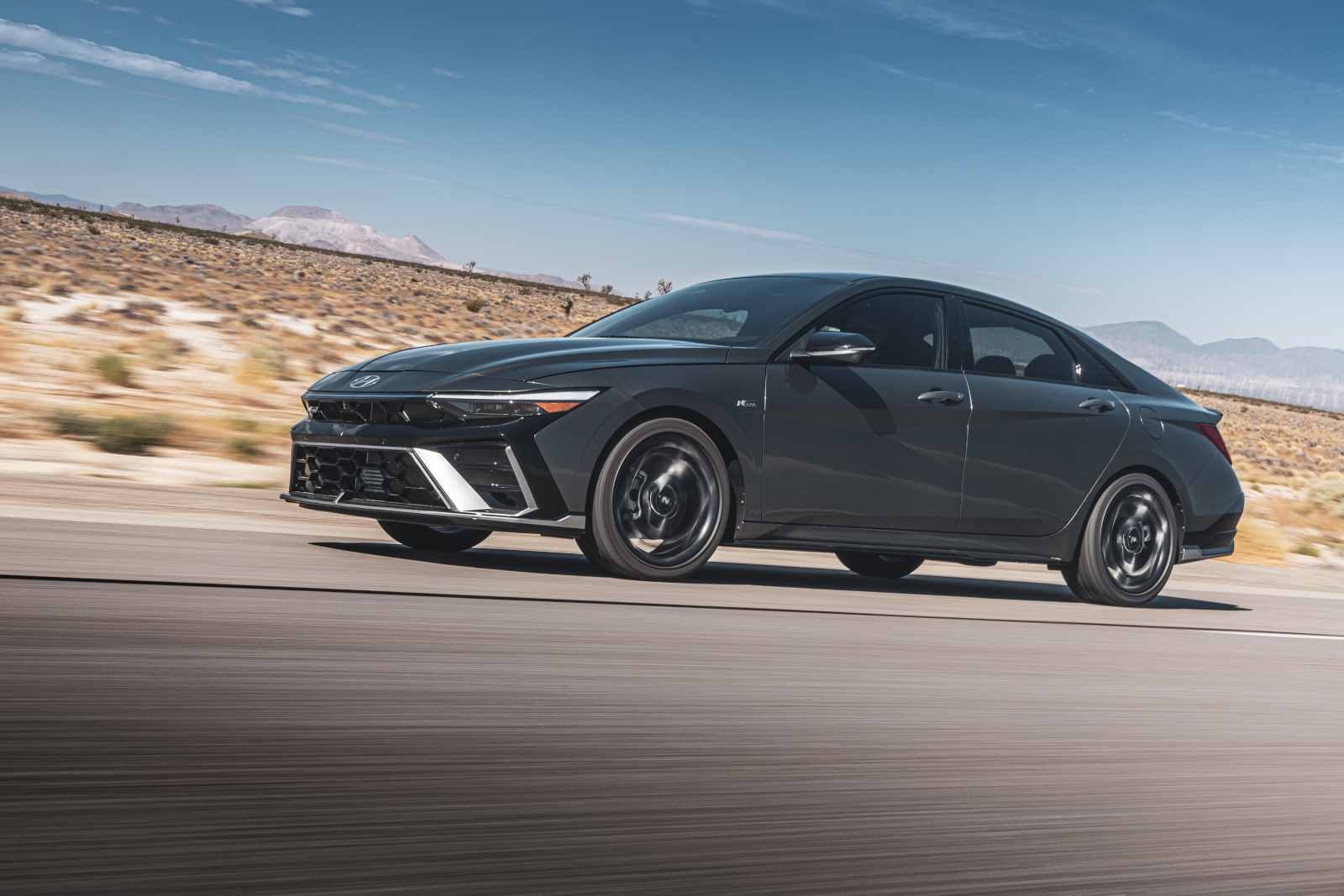
The 2026 Hyundai Elantra answers Toyota's compact sedan dominance with a powertrain lineup spanning efficient hybrids to turbocharged performance variants - all wrapped in a technology package that challenges the Corolla's value proposition on multiple fronts. For Alberta buyers navigating daily commutes and weekend highway drives, the Elantra's combination of advanced driver assistance systems and fuel efficiency creates a strong alternative to Toyota's long-standing segment leader.
| Feature | 2026 Hyundai Elantra | 2026 Toyota Corolla |
| Horsepower Range | 147-290 hp | 138-300 hp |
| Combined Fuel Economy | 4.7-7.6 L/100km | 4.4-7.4 L/100km |
| Highway Fuel Economy | 4.5-6.7 L/100km | 4.4 L/100km |
| Transmission | Smartstream IVT / 6-Speed EcoShift DCT / 7-Speed DCT | Direct Shift CVT / 6-Speed Manual / 8-Speed Auto |
What the Powertrain Lineup Actually Delivers
The Elantra's engine range addresses three distinct buyer profiles without forcing compromise. The base 2.0L MPI Atkinson four-cylinder generates 147 hp and 132 lb-ft across Essential, Preferred, and Luxury trims, paired with a Smartstream IVT transmission that prioritizes smoothness over engagement. This powertrain achieves 6.8 L/100km combined with highway efficiency dropping to 5.9 L/100km - numbers that matter when covering the Trans-Canada Highway between Calgary and Medicine Hat.
The Luxury Hybrid shifts to a 1.6L GDI hybrid four-cylinder producing 139 hp combined with 195 lb-ft of torque through a 6-Speed EcoShift dual-clutch transmission. Fuel consumption drops to 4.7 L/100km combined, with city driving at 4.8 L/100km and highway at 4.5 L/100km. The multi-link rear suspension on this variant improves ride quality over the torsion beam setup found on non-hybrid models.
For buyers prioritizing response over efficiency, the N Line top employs a 1.6L turbocharged four-cylinder delivering 201 hp at 6,000 rpm and 195 lb-ft from 1,500-4,500 rpm. The 7-Speed DCT transmission and sport-tuned multi-link rear suspension transform the platform's dynamics, though combined fuel economy rises to 7.6 L/100km.
While the Corolla's base 2.0L inline-four produces 169 hp and 151 lb-ft - a 22 hp advantage over the Elantra's standard engine - the Elantra's turbocharged option delivers stronger mid-range torque across a broader rpm band, which matters more for highway passing maneuvers common on Alberta's two-lane provincial highways.
The 4.7 L/100km Hybrid - and What It Costs You
The Elantra Luxury Hybrid's 4.7 L/100km combined rating trails the Corolla Hybrid LE's 4.4 L/100km figure by 0.3 L/100km - a difference that works out to roughly 6 litres over 2,000 km of driving. The Elantra hybrid's advantage appears in real-world highway efficiency: its 4.5 L/100km highway rating beats the Corolla's combined figure, reflecting the 6-Speed EcoShift DCT's ability to hold gears at cruising speeds rather than hunting through ratios like a CVT.
The Corolla Hybrid LE with front-wheel drive positions it as the entry point to Toyota's electrified lineup. The Elantra Luxury Hybrid carries a premium for its multi-link rear suspension and dual-clutch transmission technology - equipment that changes how the vehicle absorbs expansion joints on Highway 2 between Edmonton and Calgary.
For Alberta families who cover 20,000 km annually with mixed city and highway driving, the Elantra Luxury Hybrid's 4.5 L/100km highway rating delivers tangible savings on long-distance trips - without requiring the charging infrastructure that plug-in hybrids demand.
Where Hyundai Adds Technology Standard
The Elantra's technology progression starts with an 8.0-inch Display Audio system on base trims, supporting both Android Auto and Apple CarPlay integration. The heated steering wheel and leather-wrapped rim come standard across the lineup - features Toyota reserves for higher trim levels.
Upper Elantra trims add:
- 10.25-inch navigation display with split-screen functionality
- 10.25-inch digital instrument cluster replacing analog gauges
- Bose premium audio system with cabin-tuned acoustics
- Wireless charging pad with phone-cooling ventilation
- Digital Key Touch for smartphone-based vehicle access
The Corolla counters with Toyota Safety Sense 3.0 and wireless smartphone integration on most trims, plus available 12.3-inch digital gauge cluster on XSE models. The Corolla's 7-inch base digital cluster provides essential information without the customization options Hyundai's 10.25-inch system enables.
While the Corolla's established Toyota Multimedia System offers proven reliability, the Elantra's 10.25-inch navigation display provides split-screen mapping and media control simultaneously - which matters for drivers who navigate unfamiliar rural Alberta routes while managing audio sources.
The Safety Systems That Actually Intervene
Hyundai's driver assistance package delivers active intervention across multiple scenarios:
- Forward Collision-Avoidance Assist with pedestrian and cyclist detection
- Highway Driving Assist combining lane centering with adaptive cruise
- Blind-spot Collision-avoidance Warning with steering intervention
- Rear Cross-Traffic Collision-Avoidance Assist during reversing
- Safe Exit Warning preventing door opening into traffic
- Smart Cruise Control with stop-and-go traffic management
The Corolla's Toyota Safety Sense 3.0 includes Blind Spot Monitor, Rear Cross Traffic Alert, and Safe Exit Assist across nine airbags. The system provides warnings but relies more heavily on driver response than Hyundai's collision-avoidance systems that apply steering or braking inputs.
The Elantra's Highway Driving Assist maintains lane position and following distance on controlled-access highways - a feature that reduces driver fatigue on the 300 km stretch between Calgary and Lethbridge where traffic density varies dramatically. The system requires hands on the wheel but handles minor steering corrections that accumulate over long distances.
For Alberta drivers who regularly cover highway distances exceeding 200 km, the Elantra's Highway Driving Assist and stop-and-go Smart Cruise Control address the specific fatigue points of prairie driving - straight sections followed by sudden slowdowns for construction zones or wildlife.
The Verdict for Alberta Highway Commuters
The 2026 Hyundai Elantra wins for drivers who cover meaningful highway distances and value active safety intervention over maximum cargo volume. The Luxury Hybrid's 4.5 L/100km highway efficiency combined with Highway Driving Assist creates a more relaxed long-distance experience than the Corolla's CVT-based hybrid system - without requiring the premium fuel some turbocharged competitors demand.
The Elantra's 10.25-inch digital cluster and navigation display, wireless charging, and comprehensive collision-avoidance systems come standard on upper trims where the Corolla requires stepping into higher price points. For buyers who spend 60+ minutes daily on Highway 2 or the QEII, the Elantra's technology and safety package directly addresses the fatigue and distraction risks of prairie highway driving.
While the Corolla offers larger cargo capacity and Toyota's established resale reputation, the Elantra delivers stronger highway fuel efficiency in hybrid form and more active safety intervention across the lineup - advantages that matter more for Alberta buyers whose primary use case is commuting, not hauling. Visit Crowfoot Hyundai to experience how the Elantra's Highway Driving Assist and turbocharged powertrain options change the daily drive equation.