

Which 2026 Hyundai vehicles are the most fuel-efficient?
Which 2026 Hyundai vehicles are the most fuel-efficient?
Posted on March 29, 2026
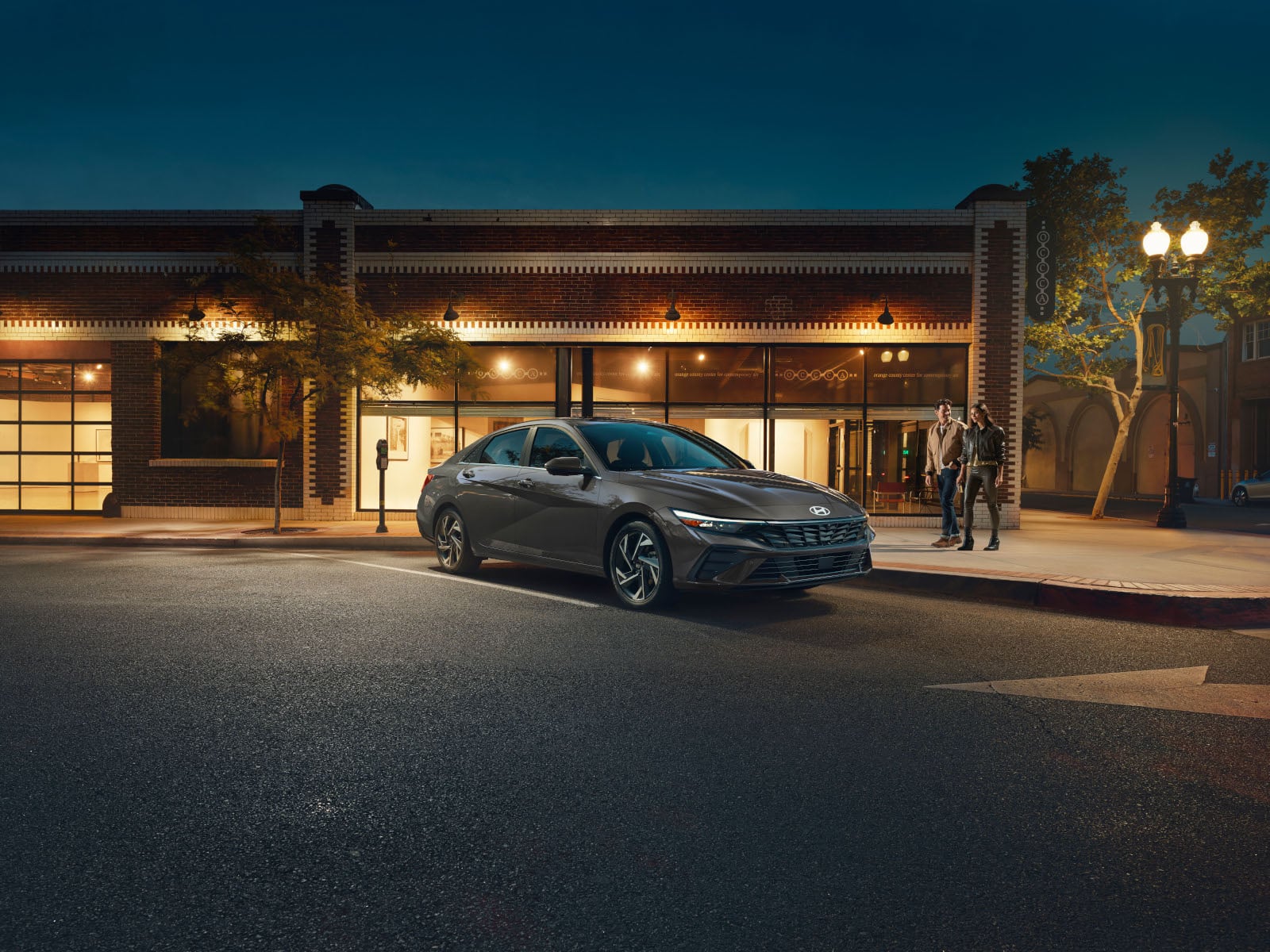
If you're shopping for a new Hyundai in Calgary and fuel economy is a priority, you're in the right place. The 2026 Hyundai lineup offers some of the most efficient vehicles on Canadian roads - from fully electric models that eliminate fuel costs entirely to hybrids that deliver impressive combined ratings. Here's how the lineup stacks up.
2026 Hyundai Fuel Economy Ratings
Natural Resources Canada publishes official fuel consumption figures for every vehicle sold in Canada. For 2026, Hyundai's most efficient models are all electrified - either fully electric or hybrid. Here's the breakdown:
Electric Vehicles (Le/100 km)
- IONIQ 5: 1.8 Le/100 km combined (550 km range)
- Kona Electric: 2.0 Le/100 km combined (420 km range)
Hybrid Vehicles (L/100 km)
- Elantra Hybrid: 4.7 L/100 km combined (4.8 city / 4.5 highway)
- Sonata Hybrid: 5.0 L/100 km combined (5.3 city / 4.6 highway)
- Tucson Hybrid: 6.7 L/100 km combined (6.7 city / 6.7 highway)
- Santa Fe Hybrid: 6.9 L/100 km combined (6.8 city / 6.9 highway)
Gasoline Vehicles (L/100 km)
- Venue: 7.5 L/100 km combined (7.9 city / 6.9 highway)
- Palisade: 11.1 L/100 km combined (12.2 city / 9.7 highway)
The IONIQ 5 takes the top spot with a combined rating of 1.8 Le/100 km - the equivalent of 1.8 litres per 100 kilometres if it burned gasoline. In reality, it uses zero fuel and costs roughly $300-$400 per year to charge at home for typical Canadian driving.
What Affects Real-World Fuel Economy
Official ratings are tested under controlled conditions. Real-world consumption varies based on driving style, weather, terrain, and load. Here's what matters most:
Highway vs. city driving: Hybrids excel in city driving where regenerative braking recovers energy. The Elantra Hybrid's 4.8 L/100 km city rating is actually higher than its 4.5 L/100 km highway figure - unusual for a gasoline vehicle but typical for hybrids.
Cold weather: Calgary winters reduce efficiency across the board. Gasoline engines take longer to warm up, increasing consumption by 10-15% in cold weather. Electric vehicles see a more dramatic impact - winter range can drop 20-30% in typical urban winter conditions (around -5°C to -10°C) due to cabin heating and cold battery chemistry.
Driving habits: Smooth acceleration, moderate speeds, and anticipating stops improve efficiency in any vehicle. The difference is more noticeable in hybrids and EVs, where aggressive driving can reduce range by 15-20%.
Load and terrain: Towing, cargo, and hilly terrain increase consumption. The Tucson Hybrid and Santa Fe Hybrid are rated for 2,000 lb of towing capacity - enough for a small trailer or jet skis - but expect fuel economy to drop when towing.
Tips to Maximize Fuel Efficiency
These habits work across all powertrains but have the biggest impact on hybrids and EVs:
Use Eco mode: Hyundai models offer selectable drive modes. Eco mode adjusts throttle response and climate control to prioritize efficiency. On electric models, it can extend range by 10-15% in city driving.
Precondition EVs while plugged in: If you drive an electric IONIQ 5 or Kona Electric, preheat the cabin and battery 20-30 minutes before departure while the vehicle is still plugged in. This shifts heating load to the grid instead of the battery and warms the pack for better performance.
Maintain tire pressure: Cold air lowers tire pressure, increasing rolling resistance. Check pressure monthly in winter and maintain the manufacturer's recommended PSI.
Minimize HVAC use: Cabin heating is the biggest range killer in EVs. Use seat and steering wheel heaters instead of blasting the cabin heat - they consume significantly less energy and are just as effective.
Plan charging strategically: For EVs, plug in whenever possible, especially after driving while the battery is still warm. This improves charge efficiency and can slightly extend usable range.
The Efficiency Leader: IONIQ 5
The IONIQ 5 is one of Hyundai's most efficient EVs available on the Canadian market. It's built on the E-GMP platform with an 84 kWh battery. The IONIQ 5 N trim produces 601 hp (641 hp with N Grin Boost) and delivers 356 km of range.
Charging is fast: the IONIQ 5 uses 800-volt architecture and can charge from 10-80% in 18 minutes at a 350 kW DC fast charger. It's also among the first non-Tesla models to feature a native NACS port, giving you access to the Supercharger network across Canada.
For Calgary drivers, the IONIQ 5’s efficiency translates to real savings. At 1.8 Le/100 km combined, it costs roughly $300-$400 per year to charge at home for typical driving. Compare that to the $2,100 annual fuel cost of a Venue at 7.5 L/100 km, and the savings add up quickly.
Why Efficiency Matters in Calgary
Calgary's driving conditions - long commutes, cold winters, and highway-heavy routes - make fuel economy a practical concern. The city's sprawl means many drivers cover 20,000-25,000 km per year, and winter temperatures regularly drop below -10°C.
For electric vehicles, Calgary's cold winters reduce range by 20-30% in typical conditions. That's still enough for most daily needs, but it's worth planning for more frequent charging stops on longer trips.
Hybrids handle winter better. The Elantra Hybrid and Tucson Hybrid use their gasoline engines to heat the cabin, so cold weather has less impact on efficiency. Expect a 10-15% increase in consumption during winter, but the hybrid system still delivers significant savings over a traditional gasoline engine.
The Most Efficient Hyundai for Your Needs
The most efficient Hyundai depends on your driving patterns and priorities:
Best overall efficiency: IONIQ 5 (1.8 Le/100 km combined, 550 km range). Zero fuel costs, fast charging, and enough range for most daily driving.
Best hybrid sedan: Elantra Hybrid (4.7 L/100 km combined). Affordable, practical, and delivers near-EV efficiency without range anxiety.
Best hybrid SUV: Tucson Hybrid (6.7 L/100 km combined). Family-friendly space, AWD standard, and competitive efficiency for a compact SUV.
Best for long-distance commuters: Sonata Hybrid (5.0 L/100 km combined). Highway-focused efficiency and a comfortable ride for Calgary-to-Edmonton runs.
Best for winter driving: Tucson Hybrid or Santa Fe Hybrid. Both handle cold weather better than EVs and deliver strong efficiency year-round.
If you're ready to explore Hyundai's most efficient models in person, visit Crowfoot Hyundai in Calgary. Our team can walk you through the IONIQ 5's charging setup, explain how the Tucson Hybrid's powertrain works, or help you compare real-world efficiency across the lineup.